
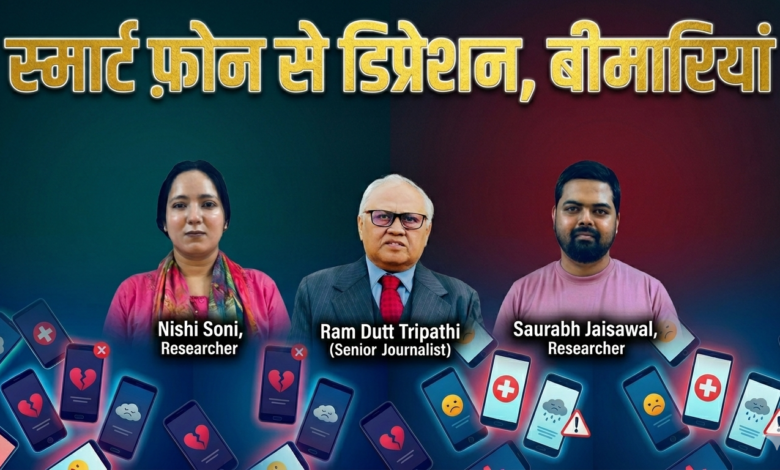
Dr. Saurabh Jaiswal & Dr. Nishi Soni
In today’s modern world, smartphones have become an essential part of our daily lives. From the moment we wake up in the morning to the time we go to sleep at night, we remain connected through them. Smartphones have made communication easier, faster, and more convenient.
However, their excessive use is now emerging as a serious concern, especially among students, as it is affecting their mental health, daily routines, and overall well-being.
Our research, conducted on approximately 1050 college students during the period of 2022- 2025, shows that smartphone addiction is becoming increasingly among young people. A significant proportion of students were found to be dependent on their phones, with about 72%showing signs of smartphone addiction.
Prof. Sudhir Kumar and Prof. Sangeeta Rani from the Department of Zoology Lucknow University supervised this study . The Study was supported by ICMR, New Delhi funds .
This growing dependency is closely linked with various mental health issues. Students who spend more time on their smartphones tend to experience higher levels of depression, daytime sleepiness, fatigue, and difficulty concentrating on their academic work. The findings also indicate that around 73% of students experienced depressive symptoms who were addicted to smartphones. This clearly suggests a strong connection between excessive smartphone use and declining mental health among students.
One of the major reasons behind this problem is the reduction in real-life social interactions. Instead of spending quality time with family and friends, many students remain engaged with their screens for long hours. Over time, this behaviour leads to social isolation, increased stress, and emotional imbalance. Human interaction plays a vital role in maintaining mental health, and its absence can make individuals feel lonely and disconnected.
Another important factor is the impact of smartphone use on sleep patterns. Many students have the habit of checking their phones immediately after waking up and continuing to use them throughout the day, often until late at night. This constant screen exposure, especially before bedtime, disrupts the body’s natural biological rhythm. As a result, students experience poor sleep quality, which leads to tiredness, lack of energy, and reduced productivity during the day.
Over time, this continuous usage becomes difficult to control and starts interfering with daily life. In simple terms, while smartphones are undoubtedly useful, their overuse can negatively affect both mental and physical health. Therefore, students need to develop healthy habits, such as limiting screen time, avoiding phone use before sleep, and engaging more in face-to-face interactions.
We also found that melatonin (Sleep hormone) peak delayed in the smartphone addicted group that may causes delayed sleep and poor sleep quality.In conclusion, smartphone addiction is a growing issue among students. Managing smartphone
use wisely and maintaining a balance between digital and real-life activities is essential for a healthy, productive, and balanced lifestyle.
कृपया पूरी बातचीत सुनें :