By Dr. Siby K. Joseph
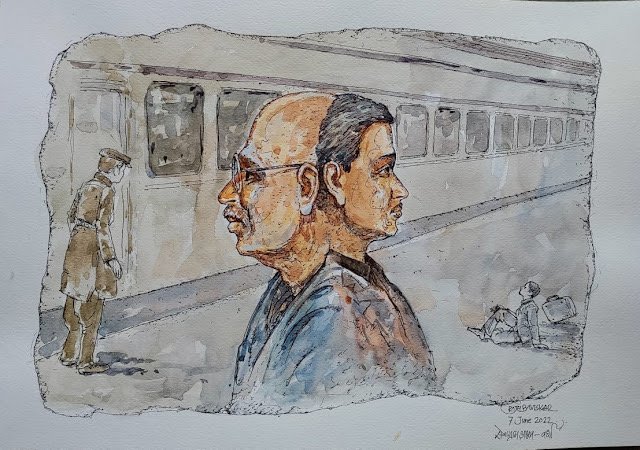
Today marks the 133rd anniversary of a pivotal event that fundamentally transformed the life of Mohandas Karamchand Gandhi on South African soil. On 7 June 1893, Gandhi, then a young Indian barrister, was travelling by train from Durban to Pretoria.
Despite holding a valid first-class ticket, he was forcefully evicted from his compartment at the Pietermaritzburg railway station. The humiliation Gandhi faced at Pietermaritzburg was the exact moment his active nonviolence was born.
This unjust act was driven purely by racial prejudice; he was thrown out simply because of his skin colour by an individual who believed in white supremacy. It was a direct consequence of a deeply entrenched, discriminatory mentality—the very foundation that later institutionalised apartheid. Though legally entitled to travel, Gandhi was subjected to severe humiliation on that fateful night solely due to this pervasive bias.
The Universal Lesson of Pietermaritzburg
The enduring lesson from Pietermaritzburg is clear: discrimination of any kind, on any basis, and at any level is inherently wrong and must be vehemently opposed.
To truly eradicate discrimination, merely changing laws is not sufficient; it demands a profound transformation of our mindset. Achieving this requires us to dismantle the deeply rooted prejudices within our own hearts and minds.
Overcoming the suffering and humiliation caused by bias requires a deep conviction in human equality. No individual is inherently superior or inferior. Our goal must be to build harmonious relationships across humanity, anchored in mutual respect, brotherhood, and love, while actively countering the mindset that breeds division.
Reflections on Contemporary Indian Society
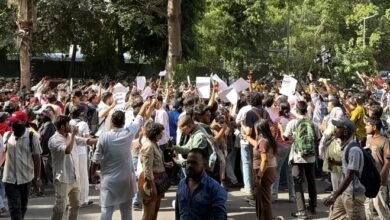
This historical incident holds a mirror to modern India, where insidious forms of discrimination continue to manifest along the lines of religion, caste, creed, and language. Religious polarization has reached unprecedented heights in recent times.
Interestingly, a dominant narrative has emerged suggesting that the majority community faces a threat from minorities. Concurrently, religious minorities face severe challenges, including systemic discrimination in securing housing in urban areas, which drives further segregation and deepens societal divisions.
This situation is worsened by targeted economic boycotts against minorities, which disrupt their small businesses and traditional means of livelihood. Equally concerning is the rise of vigilantism, with self-appointed moral policing groups enforcing restrictions on dress, food choices, interfaith relationships, and cultural practices.
Despite stringent legal protections, Dalits and Adivasis remain vulnerable to deep-rooted discrimination based on caste and creed. They are frequently subjected to physical abuse, violence, social boycotts, and institutional bias.
Furthermore, despite legal bans, the practice of manual scavenging persists, disproportionately forcing specific castes into hazardous and undignified labour.
These marginalized groups remain inadequately represented due to systemic biases built into public and private institutions.
Similarly, migrant workers face systemic bias, physical harassment, and profiling in major economic hubs. Citizens from the Northeastern states also routinely battle racial profiling, offensive stereotyping, and physical assaults in metropolitan areas.
This pervasive marginalization fosters a deep sense of exclusion, making these communities feel disconnected from mainstream India and leading to further alienation.
Compounding these social fractures, the aggressive push for linguistic uniformity triggers severe friction across regions.
This enforcement fuels parochial sentiments and directly undermines India’s rich multilingual heritage, which is explicitly protected by the Constitution.
Ultimately, these compounding divisions threaten to fracture India’s diverse multicultural fabric and erode the core values the nation has stood for over generations.
Today, as we strive to preserve our multicultural society, India must return to these foundational roots.
This requires an earnest effort to deconstruct the divisive mentalities that poison our collective consciousness.
We must use our constitutional principles as guiding values to actively dismantle contemporary biases.
Just as Gandhi pivoted his personal grievance into a collective, nonviolent struggle for human dignity, we too must confront and arrest modern discrimination through peaceful, legal, and constitutional means.
This anniversary serves as a timely reminder to reject hatred, embrace our shared humanity, and uphold the constitutional ideals of justice and equality for all.
Note :
The Library and Research Centre for Gandhian Studies of Sevagram Ashram Pratishthan, Wardha, Maharashtra, India, has been instrumental in organising both offline and online programmes, including international webinars on the Pietermaritzburg railway episode. It houses a rich collection of resources, including a short film and archival materials relating to the incident. Those who would like to obtain more information may contact the Director via email at: directorjbmlrc@gmail.com.
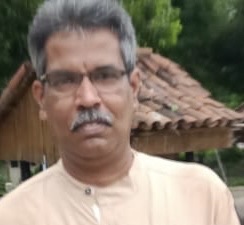
About the Author : Dr. Siby K. joseph is Director, Sri Jamnalal Bajaj Memorial Library and Research Centre for Gandhian Studies, Sevagram Ashram Pratishthan, Sevagram,Wardha- 442102, Maharashtra (INDIA) Email: directorjbmlrc@gmail.com
Pietermaritzburg Rail Episode — twin statues installed at the entrance of the station. Illustrated by Artist Raju Baviskar at Anandshala Camp, Sevagram Ashram Pratishthan.
Focus Keyword: Pietermaritzburg railway incident Gandhi 133rd anniversary
Secondary Keywords: Gandhi nonviolence origin, Gandhi South Africa 1893, discrimination India, Gandhian values contemporary India, Sevagram Ashram Pratishthan