
Siby K Joseph, Sevagram Wardha

Nuclear Weapons Spending Hit $118.8 Billion in 2025 — Who Is Driving This Mad Rush, Who Profits, and What Is Being Sacrificed
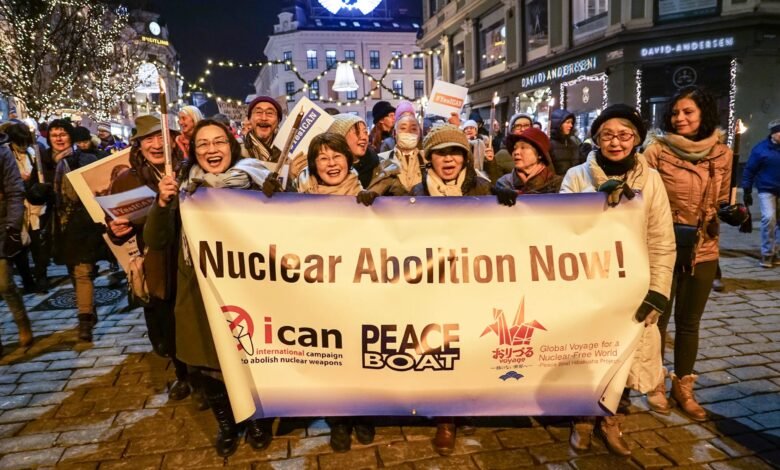
The International Campaign to Abolish Nuclear Weapons (ICAN), a Nobel Peace Prize-winning organisation based in Switzerland, has released a major new study exposing the skyrocketing costs of global nuclear arsenals.
Through ICAN’s sustained campaigning, the Treaty on the Prohibition of Nuclear Weapons (TPNW) was adopted in 2017 and entered into force in 2021.
In their newly published report, Premeditated: Nuclear Weapons Spending in 2025, authors Alicia Sanders-Zakre and Susi Snyder present data released on 8 June 2026. Global nuclear weapons spending amounted to $3,768 per second for every second of 2025 — a total of $118.8 billion across the world’s nine nuclear-armed states. Over just the past five years, the cumulative total has reached $471 billion.
The Numbers
Total global spending grew by 19 percent ($16.8 billion) in a single year. The United States led all spending at $69.2 billion — more than all other nuclear-armed nations combined — with the largest annual increase of $12.4 billion. China ranked second at $13.5 billion. The United Kingdom overtook Russia to become the third largest spender at $12.6 billion, against Russia’s $9.5 billion.
The US spending alone could have covered the entire UN annual budget 19 times over — at a moment when the UN and the global humanitarian sector face deep funding cuts from the very same governments.
Why This Mad Rush — The Geopolitical Engine
The surge is not happening in a vacuum. After three decades of post-Cold War nuclear disarmament during which American and Russian arsenals shrank by more than 80 percent, nuclear weapons are regaining significance. Three interlocking dynamics are driving the current escalation.
First, China’s rapid expansion. China held its nuclear stockpile steady at around 200 warheads since the 1970s. It now contains more than 600 warheads and is projected to exceed 1,000 by 2030, according to a 2025 Pentagon report. China is moving from a land-based force to a land-air-sea nuclear triad.
Second, the collapse of arms control frameworks. The breakdown of strategic agreements and growing competition between nuclear powers are major concerns. Intensifying geopolitical competition means a very strong incentive for countries to increase reliance on nuclear weapons.
Third, the India-Pakistan flashpoint. In early 2025, tensions between India and Pakistan briefly spilled over into armed conflict. The combination of strikes on nuclear-related military infrastructure and third-party disinformation risked turning a conventional conflict into a nuclear crisis. SIPRI called this “a stark warning for states seeking to increase their reliance on nuclear weapons.”
The nine nuclear-armed states continued programmes to modernise and enhance their nuclear arsenals in 2025, and most deployed new nuclear-armed or nuclear-capable weapon systems during the year.
Who Is Profiting
Behind every dollar of government spending stands a corporate beneficiary. Northrop Grumman and General Dynamics are the biggest nuclear weapons profiteers, with outstanding contracts with a potential value of at least $31 billion and $24 billion respectively. BAE Systems, Boeing, Leonardo, Lockheed Martin and RTX also hold multi-billion-dollar contracts for nuclear weapons production and maintenance.
Lockheed Martin generated $64.7 billion in arms sales in 2024, the highest of any company. The top 20 defence firms brought in a combined $438.4 billion in arms revenue, with 14 of the top 20 companies based in the US or China.
These corporations do not merely supply weapons — they shape policy. Senior officials in government often go easy on major weapons companies so as not to ruin their chances of getting lucrative positions with them upon leaving government. This revolving door between the Pentagon and the defence industry is well-documented.
Inefficiency is itself profitable
The Columbia-class submarine program is running about 16 months behind schedule and is $17 billion over budget — lining the pockets of manufacturer General Dynamics, whose revenues went up 8.1% in 2024. Cost overruns, in this industry, are not failures. They are revenue.
What Is Being Sacrificed
While nuclear arsenals expand, basic human needs go unmet — and the same governments responsible for both decisions are cutting the latter to fund the former.
An estimated 673 million people — 8.2 percent of the global population — experienced hunger in 2024. Hunger continued to rise in most subregions of Africa and western Asia.
The World Food Programme aims to reach 110 million of the most vulnerable in 2026 at an estimated cost of $13 billion, but current funding forecasts indicate WFP may only receive close to half that amount. The entire WFP annual target — feeding 110 million of the world’s hungriest people — costs less than what the United States alone spent on nuclear weapons in a single month of 2025.
UNICEF’s nutrition programming faced a 72 percent funding gap in 2025, forcing cuts in 20 priority countries. Meanwhile, 150.2 million children remain stunted globally, and the world is not on track to meet the 2030 Zero Hunger target.
The contrast is not coincidental. It is a policy choice.
The Voices of the Report
ICAN’s Director of Programmes Susi Snyder stated: “At a time when the cost of living is skyrocketing and food and fuel are unaffordable for so many, it is unthinkable that these nine countries are spending billions on a false promise of security. Nuclear weapons cannot be used without causing catastrophe, and the false logic of nuclear deterrence requires us to trust our enemies with our very survival.”
Alicia Sanders-Zakre, ICAN’s Head of Policy, added: “Our research is annual, but nuclear weapons spending is not. The nine nuclear-armed states are planning to maintain and modernize their nuclear forces for decades to come, diverting untold billions of dollars away from real human security needs.”
France, the United Kingdom, and the United States have committed to developing and maintaining weapons systems well into the next century. This is not a short-term budget choice — it is a generational lock-in of the nuclear threat.
ICAN is calling on governments worldwide to join the Treaty on the Prohibition of Nuclear Weapons. The full report is available at: https://www.icanw.org/premeditated_2025_global_nuclear_weapons_spending
(Author : Dr. Siby K. Joseph is Director, International Fellowship Program on Nonviolence and Peace, https://nonvpi.in/)
,