By Dr. Siby K. Joseph
On January 19, 1937, a historic moment unfolded at the ancient Kumaranalloor Devi Temple grounds in Kottayam, Kerala. Prompted by the Travancore royal family following the landmark 1936 Temple Entry Proclamation—which legally opened state temples to everyone—Mahatma Gandhi arrived to a vast sea of waiting devotees. As his procession neared the temple gates, he was warmly welcomed in the traditional manner.
Yet, what truly lifted his spirit happened just before he stepped inside the shrine. The temple was a private stronghold owned by the orthodox Nambudiri community—a group that held immense social privilege and could have easily resisted the new royal law. Instead, Gandhi watched the Nambudiri trustee actively and affectionately draw the hesitant avarnas(marginalized Dalits) forward, inviting them to cross the threshold before Gandhi himself stepped inside.
Moved by this sight, Gandhi walked into the inner sanctum of the Kumaranalloor temple. Those who were there remember him standing quietly before the deity for about fifteen minutes, visibly moved with tears in his eyes as he prayed and reflected on this profound breakthrough.
Following his time inside the shrine, a grand public meeting was organized on the temple premises to mark the historic occasion. To welcome Gandhiji, a choir of young children began singing in unison, their voices echoing beautifully through the crowd: “Bharata Veeran Mahitha Prabhavan, Mahatma Gandhi Jai Jai…”
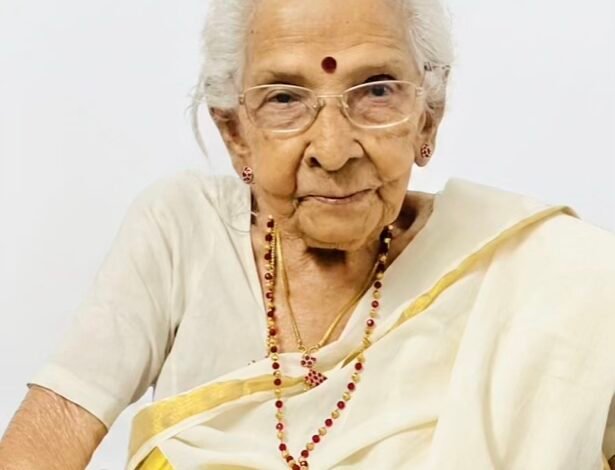
Among the children in that choir was a little girl, barely ten years old, named Vakkayil Pankajakshi. Deeply moved by the sweet melody and the pure devotion of the children, Gandhiji called young Pankajakshi forward, embraced her warmly, and presented her with a silver pot filled with coins. What she received that morning was far more than a physical keepsake; it was the very spirit of a free and inclusive nation, passed down through the gentle touch of the Mahatma.
Deeply touched by this genuine breakdown of ancient barriers, Gandhi delivered a historic address to the gathered crowd, sharing his joy:
“There is a special joy that I am experiencing this morning… What gladdened my heart was to see that he invited the so-called avarnas to come and enter the gates before he took me. And it did not appear to me an artificial act, but perfectly natural.”
Gandhi recognized that true social justice could not be forced purely by legal decrees. He emphasized that while a royal proclamation opens doors, it is the voluntary change of heart within the community that makes it real, noting:
“I felt then that this was really the proper manner of giving effect to the Proclamation. The Proclamation does not say that the hitherto proud Nambudiris should take avarnas by their arms and give them the place of preference in the temples. Of course, I own that the spirit of the Proclamation demands what this friend has done this morning, but then no prince can possibly dictate to the hearts of his people. All responses from the heart must be in their very nature spontaneous, and in this, for him, very natural act of expression of brotherhood I saw a proper fulfilment of the spirit of the Proclamation.”
A Living Chapter of History: The Story of Pankajakshiyamma Teacher
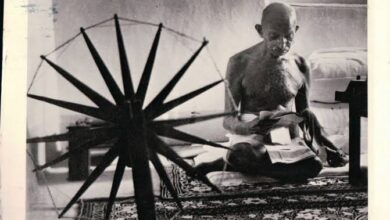
The blessing that young Pankajakshi received that morning became an unforgettable anchor for the rest of her life. In an article written by historian Tom Melukavu in 2025, he noted that even in her late nineties, she would still sing that welcome song with deep emotion. In an interview later in her life, she fondly recalled how that historic visit sparked a lifelong connection to Gandhian ideals. She remembered the distribution of charkhas (spinning wheels) and taklis (hand spindles), vividly explaining how she and others were trained to use the spinning wheel, and demonstrating how to operate the delicate hand spindle to spin yarn.
True to the spirit of Gandhi, she dedicated her life to helping others by stepping into the noble profession of teaching. As Vakkayil Pankajakshiyamma Teacher, she spent decades shaping the minds, values, and character of generations of students in Kerala, quietly sowing the seeds of kindness, truth, and equality.
Throughout her long life, she fiercely guarded the sacred memory of Gandhiji’s touch, the rhythm of that historic day, and the precious artifact that bound her directly to the birth of a free India. Her life became a living bridge spanning nearly a century, connecting modern generations directly back to the radiant dawn of the freedom movement.
The Final Farewell
Recently, she was hospitalized in Kochi due to age-related health issues, and this extraordinary journey came to its quiet conclusion on August 13, 2026. Her last rites took place on August 14—just one day before the nation observes the anniversary of its independence. With the passing of Vakkayil Pankajakshiyamma Teacher, we lose far more than an individual; we lose one of the very last living chapters of our national history.
In the deeply divided world we witness today, her life stands as a gentle, shining reminder of what Gandhiji truly stood for: the courage to see the goodness in everyone, the strength to answer anger with love, and the quiet determination to stand up against unfair treatment.
Today, artifacts from that era are preserved through the Sevadhi Museum & Indological Research Institute near the Kumaranalloor shrine. Yet, the truest museum of her legacy remains the hearts of the countless students she inspired.
Our tearful, deepest tributes to a remarkable soul. May her memory keep the fire of truth, equality, and brotherhood forever alive.