By Ram Dutt Tripathi
Lucknow | May 14, 2026
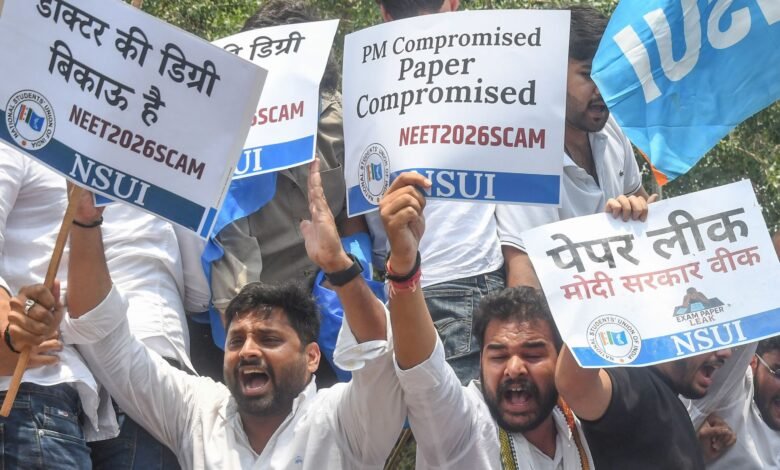
The cancellation of the NEET-UG 2026 examination has gone far beyond an administrative lapse. It has triggered a nationwide crisis of trust, anxiety, and emotional trauma among lakhs of students and their families.
As the CBI intensifies its probe into the alleged “guess paper” leak racket spanning multiple states, a far more disturbing reality is emerging — the rising psychological toll on students preparing for one of India’s most competitive examinations.
Within just 48 hours, reports of student suicides and severe mental distress surfaced from several states, including Uttar Pradesh, Rajasthan, and Goa. These are not isolated incidents. They reflect the unbearable pressure created by a system that many students now see as uncertain, unfair, and deeply compromised.
“I Was Not Surprised”: Vijay Shankar Pandey
In an exclusive interview with Media Swaraj, retired IAS officer and former Government of India Secretary Vijay Shankar Pandey said the NEET controversy reflects a much deeper collapse of governance and institutional integrity.
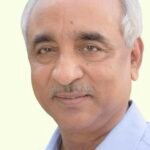
“I was not surprised. When the country’s systems themselves are not functioning honestly, how can examination systems remain untouched?” Pandey said.Having served in senior positions in the Union government, including in the education sector, Pandey argued that recurring paper leaks are symptoms of systemic corruption rather than isolated criminal acts.
According to him, the crisis cannot be solved merely through tighter security protocols or technological fixes.
“These incidents will continue as long as honesty and integrity have no value at the top,” he said.
The Real Crisis: 22 Lakh Students, Only 1 Lakh Seats
One of the strongest points raised by Pandey was the massive imbalance between demand and opportunity in medical education.
More than 22 lakh students appear for NEET every year, while the number of MBBS seats remains around one lakh.
Pandey described this artificial scarcity as the foundation of corruption.
“What kind of system is this? Twenty-two lakh children want to become doctors and we have only one lakh seats. This desperation creates the perfect environment for paper leaks, coaching mafias and corruption,” he said.
He also questioned why Indian students are forced to seek medical education abroad in countries such as Ukraine, China, Uzbekistan, and Iran.
“It is painful and humiliating that our students are compelled to leave the country for medical education,” he remarked.
“Expand Seats, End the Mafia”
Pandey proposed what he called a structural solution: dramatically increase medical education capacity.
Drawing from his experience in the Ministry of Human Resource Development in the early 2000s, he recalled how engineering education once faced similar crises of scarcity and corruption.
At that time, engineering seats were sharply expanded and technology-enabled learning systems were introduced.
“Today, if a child wants to study engineering, there is a seat available somewhere. That is why engineering paper leaks are no longer a national crisis,” he explained.
According to Pandey, expanding medical seats would weaken both the coaching industry and the paper leak networks.
“The day you create 22 lakh opportunities for 22 lakh students, the coaching mafia and paper leak business will collapse automatically,” he argued.
“One Nation, One Exam” Under Question
Pandey also criticized the “One Nation, One Examination” model, arguing that such extreme centralization is impractical for a country as large and unequal as India.
He suggested that the model has made the system more vulnerable because a single leak now affects the future of millions simultaneously.
Instead of over-centralization, he advocated stronger institutional accountability and decentralized reforms.
Coaching Industry and the Culture of Rote Learning
Another significant criticism was directed at India’s objective-type examination culture.
Pandey argued that the current system encourages rote learning, coaching dependency, and mechanical preparation rather than genuine understanding.
“The entire objective-question model was created for administrative convenience, not for students,” he said.
According to him, institutions increasingly rely on machine-evaluated systems because they reduce workload, but this approach has also fueled the explosive growth of expensive coaching centres.
Corruption Begins at the Top
Pandey repeatedly returned to what he described as the central issue — political and institutional corruption.
“When people see dishonesty rewarded at the highest levels, they naturally believe corruption is acceptable everywhere else,” he observed.
He warned that unless accountability exists at the top, lower-level corruption in examinations, recruitments, and educational institutions will continue.
A Political and Moral Challenge
The interview ended with a larger reflection on democracy and public responsibility.
Pandey urged citizens to move beyond caste, communal identity, money, and patronage politics while voting.
“If people continue voting on the basis of caste, religion, money or liquor, they cannot expect honest governance,” he said.
Senior journalist Ram Dutt Tripathi added that the appointment of institutional heads — from vice-chancellors to top bureaucrats — is ultimately shaped by political leadership.
Unless politics itself becomes more accountable, he argued, institutional reforms alone may not be enough.
Beyond “Zero Tolerance” Slogans
The NEET-UG 2026 crisis is no longer only about a leaked paper. It has become a mirror reflecting deeper failures in governance, education policy, and public accountability.
For millions of students, this is not merely a delayed examination. It is a question of emotional survival, social justice, and the right to a fair future.
The tragedy unfolding across the country demands more than apologies and slogans. It demands structural reform.
Watch the Full Interview
YouTube Live Interview:
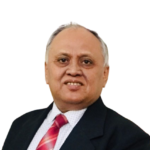
Ram Dutt Tripathi is a veteran journalist with 21 years at the BBC World Service. He was an eyewitness reporter at the Babri Masjid demolition on 6 December 1992 and broke the Allahabad High Court’s Ayodhya verdict ahead of all other journalists on 24 September 2010. His Ganga pollution reporting dates to 1989. He now publishes independently at ramdutttripathi.in and mediaswaraj.com