By Siby K. Joseph

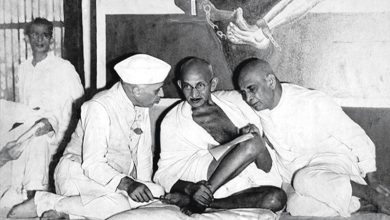
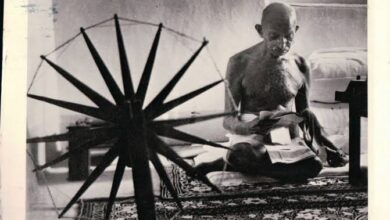
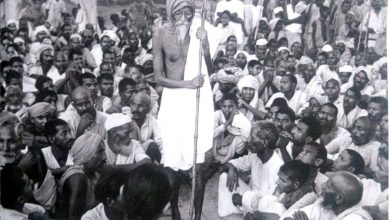
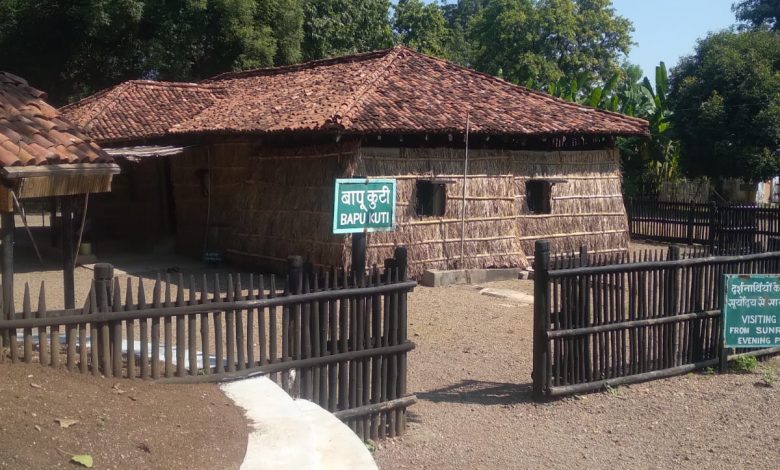
Gandhi’s simple huts at Sevagram exerted a magnetic effect, drawing people from all walks of life—from nearby villages to the farthest corners of the globe. Despite their humble appearance, these dwellings became a crucible for personal and social change. For many, a single visit to this remote village in Wardha became a life-altering event, transplanting Gandhian ideals into diverse fields such as international diplomacy, literature, and social reform across the globe. For these individuals, the encounter left an indelible imprint on their minds, serving as a constant source of energy in their subsequent life and work.
Diplomacy and Rural Development: Herbert Fischer
In 1936, a young German named Herbert Fischer joined Gandhi’s inner circle to work with the All-India Village Industries Association (AIVIA). His time at Sevagram and Wardha instilled a lifelong dedication to rural development and Indo-German relations. Following World War II, Fischer’s apprenticeship bore historic fruit when he became the first Ambassador of East Germany to India in 1972. In recognition of his enduring commitment to Gandhian principles, he was awarded the Padma Bhushan in 2003.

Spirituality and Social Equality: Tukdoji Maharaj
The Ashram’s influence also resonated deeply within India’s own spiritual traditions. During a brief stay in Gandhi’s ashram in 1936, the young sadhu Tukdoji Maharaj found his commitment to social equality solidified through Gandhi’s teachings. This influence is immortalized in his magnum opus, the Gram Geeta, which advocates for village self-rule. The imprint of Sevagram was evident in his revolutionary patriotic bhajans during the 1942 Quit India Movement and his later leadership in the Bhoodan Movement alongside Vinoba Bhave.
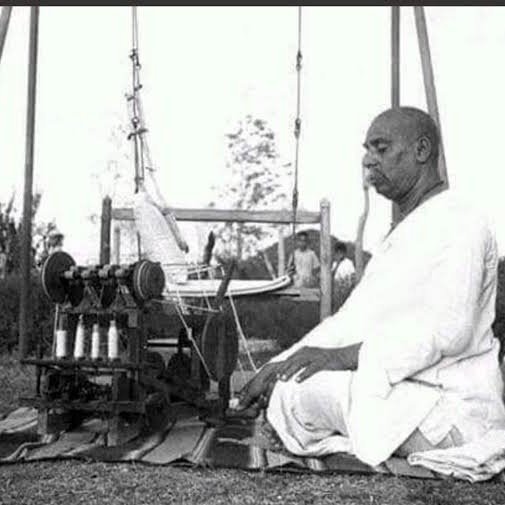
Non-Violence on European Soil: Lanza del Vasto
In 1937, Italian aristocrat Lanza del Vasto arrived at Sevagram seeking answers to the questions disturbing his mind. Gandhi renamed him Shantidas (“Servant of Peace”). After a period of intense spiritual apprenticeship, del Vasto returned to Europe and founded the Community of the Arkin France in 1948, following the martyrdom of the Mahatma. This initiative effectively transplanted the Gandhian model of communal living, self-reliance, and non-violence into a Western context, where it continues to flourish.
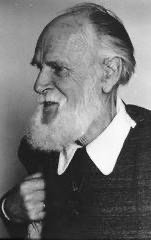
Chronicling the Mahatma: Louis Fischer
Perhaps no visitor did more to interpret Gandhi for the Western world than the American journalist Louis Fischer. During a sweltering week in June 1942, Fischer recorded the candid daily life of the Mahatma. His stay resulted in the influential book A Week with Gandhi and his 1950 masterpiece, The Life of Mahatma Gandhi, which served as the primary source for Richard Attenborough’s Oscar-winning film.
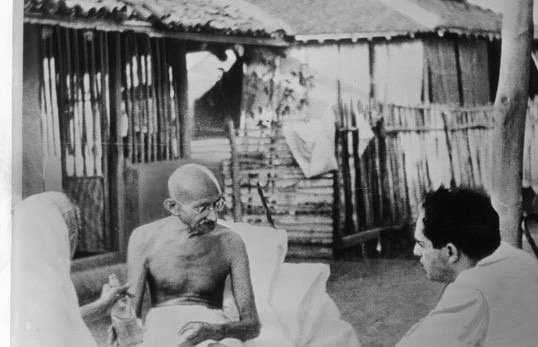
Atheism and Social Reform: Goparaju Ramachandra Rao (Gora)
Sevagram also proved that Gandhian service could transcend religious boundaries. Beginning in 1944, the atheist social reformer Gora engaged in profound discussions with Gandhi at the Ashram. Their unique bond demonstrated that a shared commitment to service and equality could unite believers and atheists alike. Inspired by these dialogues, Gora launched radical social experiments and promoted inter-caste marriages to challenge systemic inequality.
The Enduring Spirit: Ivan Illich
The magnetism of Sevagram continues to inspire everyone from ordinary citizens to noted philosophers. In January 1978, the Croatian-Austrian philosopher Ivan Illich came to Sevagram to inaugurate a conference. Reflecting on the profound impact of the space, he stated:
“Today in the morning while I was sitting in this hut where Mahatma Gandhi lived, I was trying to absorb the spirit of this concept and imbibe in me its message… The hut proclaims the principle of love and equality with everybody. …This hut of Gandhi demonstrates to the world how the dignity of the common man can be brought up. It is also a symbol of happiness which we can derive from practicing the principles of simplicity, service and truthfulness.”
Conclusion
Through these diverse figures—ambassadors, saints, aristocrats, and philosophers—Sevagram functioned as a laboratory of the spirit. Each visitor took a spark from those “magnetic huts” back to their respective corners of the world, proving that Gandhi’s vision for humanity was truly universal. Even today, this story continues to unfold, as the spirit of Sevagram remains a living source of inspiration for people from all over the world who seek a more just and simple way of life.
Note: This article is adapted from a presentation by Dr. Siby K. Joseph on the occasion of the completion of 90 years of Sevagram Ashram.