
(Ram Dutt Tripathi)

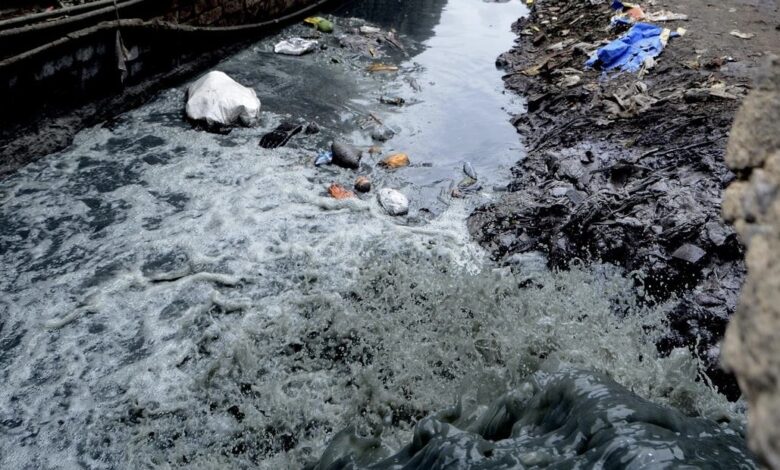
A fresh medical report submitted to the National Green Tribunal has revealed an alarming new dimension of the industrial pollution crisis around Kanpur: toxic chromium has been detected in the blood of residents living near the city’s tannery belt.
The findings are significant because they suggest that a pollution problem long associated with contaminated drains, groundwater and agricultural land may now be directly affecting human health. For decades, scientists, environmental activists and court proceedings have warned about chromium contamination linked to Kanpur’s leather industry.
The latest blood test results indicate that this industrial pollutant may have already entered the bodies of people living near the affected areas.
The laboratory investigation was conducted by the Department of Biochemistry at the Dr. Ram Manohar Lohia Institute of Medical Sciences (RMLIMS) in Lucknow.
The findings were submitted as part of an affidavit filed by the District Magistrate of Kanpur Nagar in an ongoing case dealing with industrial pollution from tanneries in the Jajmau area.
According to the affidavit, 233 blood samples collected from residents were tested and chromium levels above the permissible limit were found in 215 samples.
Government data submitted earlier to the National Green Tribunal showed that 492 blood samples from Kanpur Nagar had elevated chromium levels, indicating widespread exposure in the region.
Such findings suggest that a significant proportion of the tested residents have been exposed to the toxic metal for a long time.
When toxic heavy metals begin appearing in human blood samples, pollution is no longer just an environmental issue — it becomes a serious public health concern.
Chromium compounds are widely used in leather tanning, a process that has been at the heart of Kanpur’s industrial economy for more than a century.
5 Key Findings From the Medical Report
1. Chromium Detected in Most Blood Samples
Laboratory tests conducted by the Dr. Ram Manohar Lohia Institute of Medical Sciences Lucknow
found chromium levels above the permissible limit in 215 out of 233 blood samples collected from residents in affected areas around Kanpur.
This suggests widespread exposure to the toxic metal among the tested population.
2. Levels Several Times Higher Than Normal
The laboratory reference range for chromium in blood is 0.05–1.4 micrograms per litre.
However, several tested individuals showed levels two to six times higher than the upper limit, indicating significant exposure.
3. Residents Tested Are From Pollution-Affected Localities
The samples were collected from residents living in clusters around industrial areas such as the Jajmau tannery belt and nearby settlements.
These areas have long been associated with tannery waste, chromium dumps and polluted drains.
4. Only a Small Portion of the Population Has Been Tested
Although tens of thousands of people live in the identified affected clusters, only a few hundred residents have been tested so far.
Experts say the findings raise concerns about many other residents who may have been exposed without being tested.
5. Pollution Has Likely Entered the Food and Water System
The findings suggest that chromium exposure may be happening through multiple environmental pathways, including:
• polluted groundwater
• irrigation water
• contaminated soil
• possibly crops grown in affected areas
This means the issue may extend beyond industrial workers to ordinary residents and farming communities.
Earlier Investigations Had Also Detected Chromium
The latest findings are not the first indication of chromium exposure among residents of the Kanpur region.
Earlier investigations presented before the National Green Tribunal (NGT)had already reported elevated chromium levels in blood samples collected from residents of Kanpur Nagar and nearby districts.
Reports submitted to the tribunal indicated that a large proportion of tested individuals showed chromium concentrations above permissible limits, prompting the tribunal to direct the Uttar Pradesh government to identify affected populations and prepare an action plan.
The new laboratory analysis from the Dr. Ram Manohar Lohia Institute of Medical Sciences therefore adds further evidence to concerns that long-term environmental contamination may already be affecting human health in the region.
Only a Small Fraction of Residents Tested
The number of people tested so far represents only a small fraction of the population living in the affected areas.
Survey documents attached to the affidavit indicate that tens of thousands of residents live in the identified pollution-affected clusters around Kanpur.
Yet only a few hundred blood samples have been analysed so far.
If such a high proportion of the tested samples show elevated chromium levels, it raises serious concerns about many other residents who have not yet been tested.
The situation could therefore represent a much larger public health challenge than currently documented.
Scientific studies
Some scientific studies have also highlighted concerns specifically in the Kanpur region. A recent academic study by researchers from DSN PG College in neighbouring Unnao district described chromium contamination around Kanpur as a “very serious issue,” linking it largely to industrial waste from leather tanneries.
The researchers noted that hexavalent chromium — the most toxic form of the metal — can enter human cells and interact with genetic material, potentially causing a range of health effects if exposure continues over long periods.
The neighbouring district of Unnao, which also hosts leather and small-scale industrial units, shares the same Ganga river system and groundwater aquifers, raising concerns that contamination may extend across a wider industrial corridor along this stretch of the Ganga basin.
Environmental researchers have also reported arsenic contamination in parts of Unnao district, particularly in groundwater sources located near the Ganga floodplain. Scientific studies analysing hand-pump water in the Kanpur–Unnao region have found arsenic levels exceeding recommended drinking-water limits in some samples. The presence of arsenic alongside industrial pollutants such as chromium raises concerns that communities in the region could be exposed to multiple toxic elements through their water and food systems.
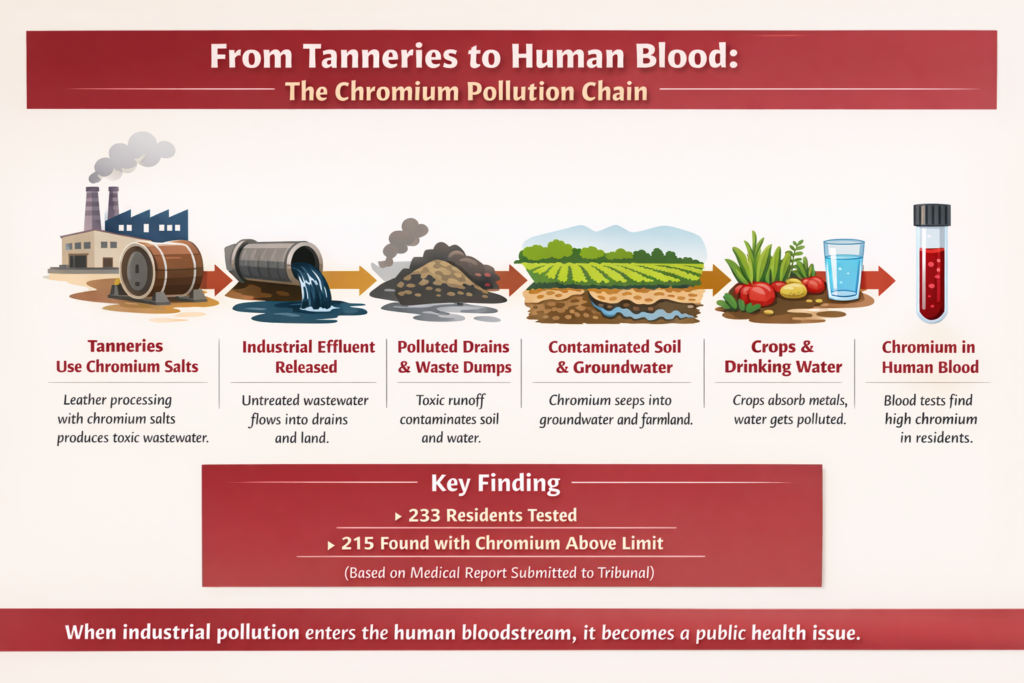
How Chromium from Tanneries Reaches Human Blood
Understanding this chain helps explain why doctors are now finding chromium in the blood of residents living near Kanpur’s tannery belt.
1. Chrome Tanning in Leather Processing
Most tanneries use chromium salts to convert animal hides into durable leather. The process is quick and efficient, but it generates wastewater and sludge containing chromium compounds.
If this waste is not properly treated or recycled through chromium recovery systems, it becomes a major source of pollution.
2. Industrial Effluents Enter Drains and Land
In the past, and sometimes even today according to several investigations, tannery effluents have entered drains, open land and waste dumping sites.
These drains eventually discharge into the Ganges River, while waste dumps allow chromium to seep into surrounding soil.
3. Contamination of Groundwater and Soil
Over time, chromium from these wastes can leach into the ground, contaminating groundwater used by nearby communities.
Agricultural fields located near polluted drains or waste dumps may also accumulate chromium in the soil.
4. Polluted Water Used for Irrigation
In several areas around the industrial belt, farmers have historically used drain water and sewage canals for irrigation.
If this water carries industrial pollutants, chromium can enter the soil and be absorbed by crops.
Earlier research by scientists at the National Botanical Research Institutehad warned that vegetables grown in such areas may contain heavy metals.
5. Entry into the Food Chain
Once heavy metals enter soil and crops, they may move into the food chain.
People can be exposed through:
• vegetables grown in contaminated fields
• drinking contaminated groundwater
• contact with polluted soil or water
6. Absorption Into the Human Body
When chromium enters the body through food, water or environmental exposure, small amounts can circulate in the bloodstream.
Recent tests conducted by the Dr. Ram Manohar Lohia Institute of Medical Sciences detected elevated chromium levels in blood samples from residents living near the industrial belt.
Possible Health Effects of Long-Term Chromium Exposure
Medical and environmental health studies have linked prolonged exposure to certain forms of chromium — particularly hexavalent chromium commonly associated with industrial pollution — with a range of health risks.
These may include skin disorders, respiratory problems, liver and kidney damage, gastrointestinal irritation and allergic reactions. Long-term exposure has also been associated in some studies with an increased risk of lung cancer and other chronic illnesses, particularly among workers exposed to high concentrations.
Doctors caution that the presence of chromium in blood samples does not automatically indicate disease in every individual. However, the findings raise important questions about long-term exposure and the need for systematic medical monitoring of affected communities.
Exposure to Multiple Sources of Pollution
Residents of the affected areas are exposed not only to chromium but to multiple sources of pollution.
For years, communities around the industrial belt have reported problems related to:
• industrial effluents from tanneries
• chromium-bearing waste dumps
• contaminated groundwater
• polluted irrigation canals carrying untreated sewage and industrial waste
• toxic sludge deposited near residential areas
Public health experts warn that long-term exposure to such a mixture of pollutants can have cumulative health effects.
The Leather Industry and Chromium Pollution
Kanpur has been one of India’s most important leather industry centres since the colonial period.
Large-scale leather processing began during the British era in the late nineteenth century, when the city developed as a major supplier of leather goods for the military.
After independence, the industry expanded rapidly, especially in the Jajmau industrial belt along the banks of the Ganga.
Chrome tanning became the dominant method because it is fast and inexpensive. However, it also produces large quantities of chromium-containing waste.
Environmental experts have long warned that improper disposal of this waste can contaminate soil and groundwater.
Failure to Control Chromium Pollution
Pollution control regulations require tanneries to remove chromium from their wastewater before discharge.
These rules include treatment through effluent treatment plants and chromium recovery systems.
However, environmental investigations and court proceedings over the years have repeatedly raised concerns that many units failed to fully comply with these norms.
Reports of untreated effluents flowing into drains and the river have surfaced repeatedly.
Large dumps of chromium-containing waste from earlier decades have also been identified in and around Kanpur.
Pollution Problem Not New
The latest medical findings may appear alarming, but the pollution crisis itself is not new.
Environmental investigations for several decades have pointed to contamination in parts of Kanpur Nagar, Kanpur Dehat and Fatehpur districts.
Scientific studies and environmental monitoring reports have warned that chromium contamination may be spreading through groundwater, agricultural land and irrigation systems.
The new blood test findings now suggest that the problem may have crossed another boundary — from the environment into the human body.
A Public Health Question That Can No Longer Be Ignored
For decades, the pollution debate around Kanpur’s leather industry has focused largely on contaminated drains, polluted groundwater and the health of the Ganga.
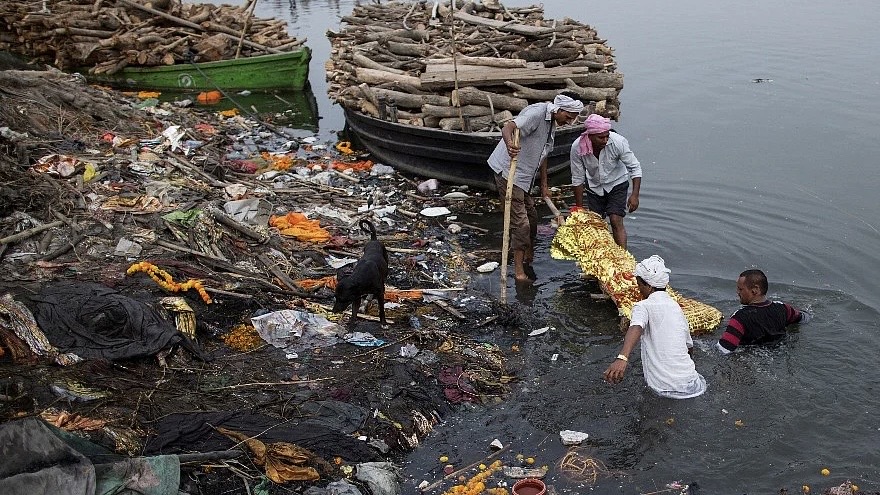
The latest medical findings suggest that the issue may have crossed an even more troubling threshold.
When toxic metals begin appearing in human blood samples, pollution is no longer only an environmental problem — it becomes a direct public health concern.
Only a small number of residents have been tested so far. Yet the majority of those samples show chromium levels above the permissible range.
This raises a question that authorities may now have to confront more seriously:
How many people may already be carrying toxic metals in their bodies without knowing it?
Answering that question may require wider environmental investigation, large-scale medical screening and stronger enforcement of pollution control measures.
For communities living in the shadow of Kanpur’s industrial belt, the issue is no longer only about pollution in water, soil or crops.
It is about the health and safety of people who have lived for years alongside one of India’s oldest industrial clusters.
And the medical evidence now suggests that the consequences of that proximity may already be flowing through their bloodstream.
For decades, scientists, environmental researchers, media reports and court proceedings have repeatedly highlighted the problem of industrial pollution in and around Kanpur. Yet the persistence of contamination raises troubling questions about enforcement and accountability. Despite warnings from researchers, public protests and repeated judicial interventions over the years, the issue of toxic industrial pollution in the region has remained unresolved.
This has led many observers to ask whether existing regulatory mechanisms are adequate to ensure accountability of both industry and administrative authorities. For residents living in affected areas, the continuing pollution crisis raises a deeper concern: despite paying taxes that sustain public institutions, communities may still be left to bear the health and environmental consequences of industrial contamination.
Another major source of concern has been the legacy of large chromium waste dumps created during earlier decades of tannery operations. Environmental investigations have reported that tens of thousands of tonnes of chromium-bearing waste — estimated at around 60,000 tonnes — were dumped at sites such as Rania in Kanpur Dehat and nearby areas during the 1970s and 1980s. Over time, these waste dumps have been linked to contamination of surrounding soil and groundwater, raising fears that toxic chromium may continue to leach into the environment long after the original industrial activity took place.
Timeline: Kanpur’s Chromium Pollution Crisis
Late 1800s – Early 1900s
Kanpur emerges as a major leather industry centre during the British colonial period.
1950s–1980s
Rapid expansion of the leather industry after independence.
1980s–1990s
Environmental concerns begin emerging about chromium contamination.
1990s
Courts begin examining tannery pollution in Kanpur.
2000s–2010s
Studies report chromium contamination in groundwater and agricultural areas.
Earlier Scientific Studies
Scientists warn about heavy metals in vegetables grown using polluted irrigation water near Jajmau.
2020–2025
Blood testing in parts of Kanpur Nagar and nearby districts indicates elevated chromium levels in many residents.
2026
RMLIMS medical report finds chromium above permissible limits in 215 of 233 blood samples from residents near Kanpur’s tannery belt.
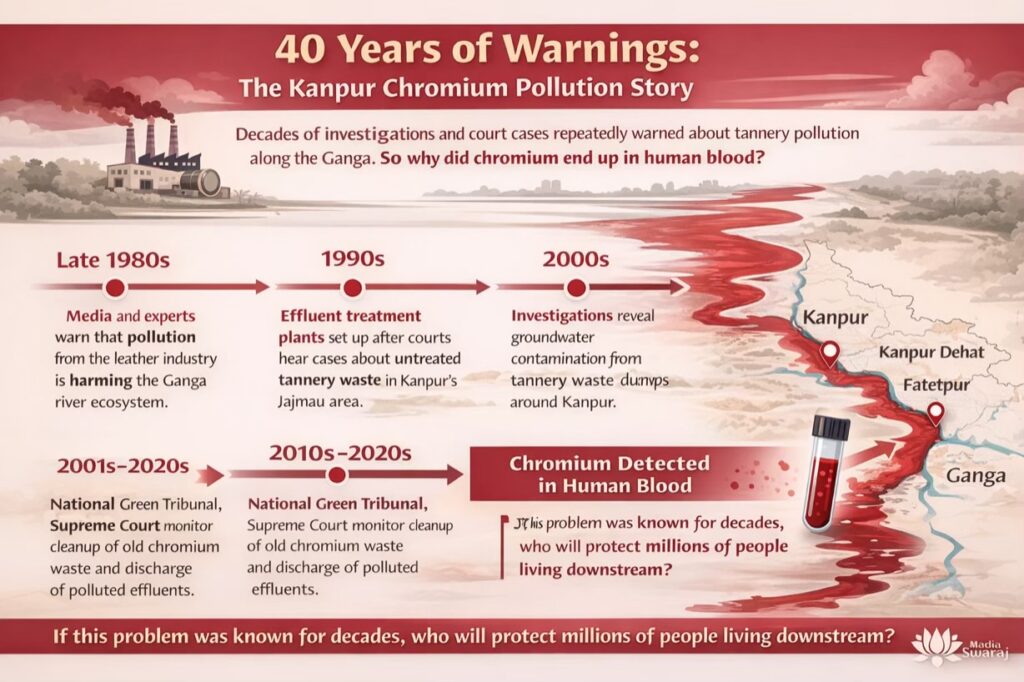
Warnings About River Pollution Were Raised Decades Ago:
More than three decades ago, investigations into river pollution in Uttar Pradesh by this writer had already raised concerns about the environmental impact of rapid urbanisation and industrialisation. An investigative series on river pollution conducted in 1988–89 highlighted how industrial waste, untreated sewage and urban expansion were increasingly contaminating rivers across the state. The study warned that growing industrial clusters and poorly regulated urban growth could severely damage river ecosystems and public health if pollution was not controlled.
Those warnings now appear strikingly relevant in light of the latest medical findings showing chromium in the blood of residents living near the industrial belt of Kanpur.
“What was once reported as environmental pollution in rivers is now appearing inside human blood.”
The study warned that untreated industrial effluents and expanding cities were placing increasing pressure on river systems across the state.
More than three decades later, the discovery of chromium in human blood samples suggests that those early warnings may not have received the attention they deserved.
Please read :