QR codes, rare photographs, and a deliberate rejection of AI — Sevagram Ashram marks 91 years with a digital initiative true to Gandhi’s spirit
SEVAGRAM, April 30, 2026. On April 30, 1936, Mahatma Gandhi arrived in a small village in Wardha district and made it his home. Ninety-one years later, in temperatures touching 45 degrees Celsius, Sevagram Ashram marked that founding moment with an announcement that Gandhi himself might have considered with characteristic caution — and perhaps, on reflection, approved.
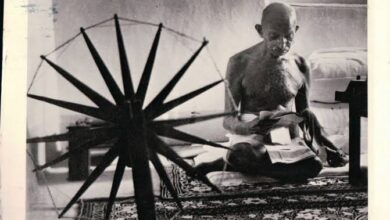
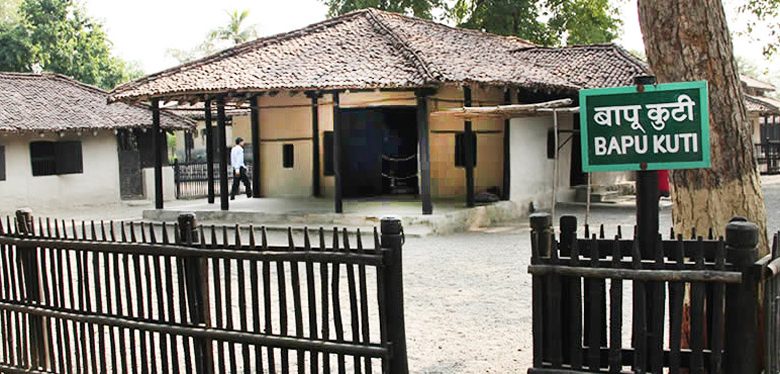
The Ashram will place QR codes outside all its major heritage buildings. Visitors who scan these codes will be taken directly to detailed historical information — enriched with rare photographs from Gandhi’s era, authentic archival material, and historical context assembled carefully by the Library and Research Centre. The simple kuti, the spinning wheel, the prayer ground — each will carry a small square code connecting the present to the past.
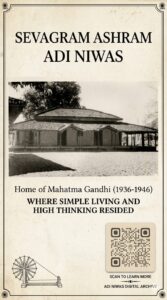
“The Ashram is embracing technology — but not at the cost of truth. AI-generated images have been explicitly rejected. Only authentic historical photographs will be used.”
The announcement was made by Shri Vijay Tambe, Secretary of Sevagram Ashram Pratishthan, during a special program held in the seminar hall of the Shri Jamnalal Bajaj Memorial Library and Research Centre for Gandhian Studies. The occasion marked both the 91st Foundation Day of the Ashram and the completion of five years of activities by the Library and Research Centre.
One decision stands out in an era when artificial intelligence can generate convincing historical imagery at the click of a button. The Ashram has explicitly decided not to use AI-generated photographs. The Library and Research Centre is carefully curating only authentic historical images from Gandhi’s era. In an institution dedicated to Satya — truth — the decision carries a significance that goes beyond aesthetics.
To demonstrate the new digital experience, the QR code for Adi Niwas — among the Ashram’s most significant buildings — was screened during the event. With a single click, visitors are transported back in time through authentic historical data. Sample cards featuring the code were presented; these cards for each building can be kept by visitors as a memento, carrying Sevagram’s history in their pockets long after they leave.
A Laboratory of Non-violence — Revisited
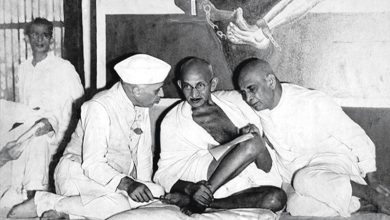
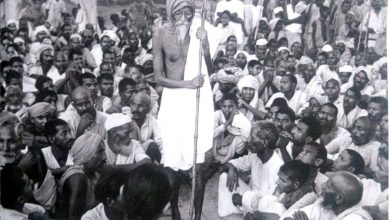
The program also featured a richly documented presentation titled “Gandhi at Sevagram Ashram: A Laboratory of Non-violence,” delivered by Dr. Siby K. Joseph, Director of the Centre. Spanning over 70 slides of rare photographs, the presentation traced the Ashram’s development, Gandhi’s daily life here, the significant decisions he made at Sevagram, and the institutions and personalities that emerged from this quiet village to shape modern India. A printed version has been made available for visitors and researchers.
That the program drew participants despite the scorching heat — around 45 degrees Celsius in Sevagram that day — said something about the enduring pull of the place. Members and friends of the Ashram, heads of Gandhian organisations, activists, and thinkers gathered in the seminar hall. The event began with a screening of Vaishnava Janato performed by artists from around the world, followed by a presentation of its original tune — a reminder that what began here has travelled far.
The program concluded with participants joining the Ashram’s evening prayer, after which Dr. Joseph addressed students and members of the media. Those interested in receiving the presentation may contact the Director of the Centre directly. The event was coordinated by Ms. Shubhangini S. Vairagade.
Gandhi chose Sevagram for its simplicity and its distance from power. Ninety-one years later, the Ashram is using the tools of a very different age to ensure that simplicity is not forgotten. The QR code outside the kuti may be the smallest possible distance between the present and a life deliberately lived.
Please listen tech guru Sam Pitroda views on Gandhi and AI below