Siby K. Joseph

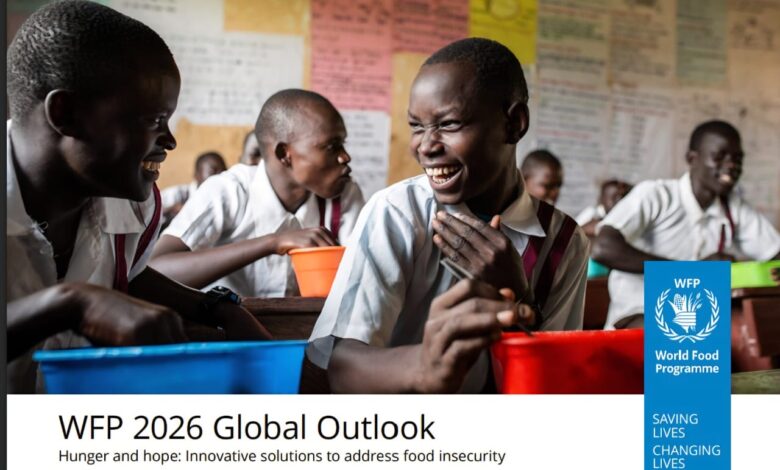
According to the WFP 2026 report, Global Outlook – Hunger and Hope, global hunger remains at alarming levels, with 318 million people facing acute food insecurity—more than double 2019 levels. This includes 41.1 million people at “Emergency” stages or worse (a 20% increase since late 2020), while confirmed famines are simultaneously unfolding in Palestine (Gaza Strip) and parts of Sudan (El Fasher and Kadugli).
Beyond these visible crises, “hidden hunger” from micronutrient deficiencies affects billions, further destabilising health systems and economies alongside the acute malnutrition of 38 million children and 12 million pregnant or breastfeeding women. The outlook through May 2026 is deeply concerning; the WFP and FAO have identified 16 hunger hotspots where conditions are expected to deteriorate, placing nations like Haiti, Mali, South Sudan, and Yemen at catastrophic risk, while Afghanistan, Nigeria, and Syria remain areas of very high concern.
Global Hotspots: Regions Sliding Towards Catastrophe
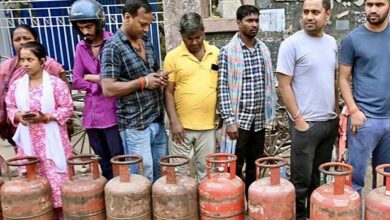
War continues to be the primary driver of global starvation. In 2025, 219 million people—nearly 70% of those facing acute hunger—lived in conflict zones. The war that began on February 28, 2026, between the United States, Israel, and Iran has severely destabilised global food and energy security. The United Nations World Food Programme (WFP) has warned that the total number of people facing acute hunger could reach record highs in 2026 if the escalation in the Middle East continues to destabilise the global economy.
New analysis by the WFP estimates that nearly 45 million more people could fall into acute food insecurity or worse if the conflict does not end by mid-year and if oil prices remain above USD 100 a barrel. This would be in addition to the 318 million people globally who are already food insecure.
Regional vulnerability is set to spike across the globe, with East and Southern Africa facing the largest absolute increase as 17.7 million more people (a 17.7% rise) could fall into acute food insecurity across 16 analyzed countries. In West and Central Africa, 12 countries face a 21% surge affecting 10.4 million people, while Asia anticipates a sharp 24% increase impacting 9.1 million people across 10 nations. Furthermore, the Middle East and North Africa could see 5.2 million additional people (a 14% increase) pushed into crisis across 12 countries, and in Latin America and the Caribbean, 2.2 million people (a 16% increase) are at risk across 3 analyzed nations, illustrating a catastrophic expansion of global hunger.
The moot question before the peace-loving people of the world is whether this ongoing war should continue pushing more and more people into hunger and poverty. The continuance of war seems mandatory for those economies based on the sale of arms and armaments; their only interests are profit and the accumulation of wealth. While millions face the starvation and ruin brought by war and conflict, the relentless drive for arms profits ensures that human lives are sacrificed for economic gain. People all over the world should come forward to say “no” to war and armaments. Otherwise, it will continue in some form or another, and we will have only ourselves to blame and much to regret. Let us wake up to stop this maddening war.
About the Author
Dr. Siby K. Joseph is the Director of the International Online Fellowship Program on Nonviolence and Peace. He is a distinguished Gandhian scholar attached to the Sevagram Ashram Pratishthan, Wardha,Maharashtra, India
Email: directorjbmlrc@gmail.com