Media Swaraj Desk
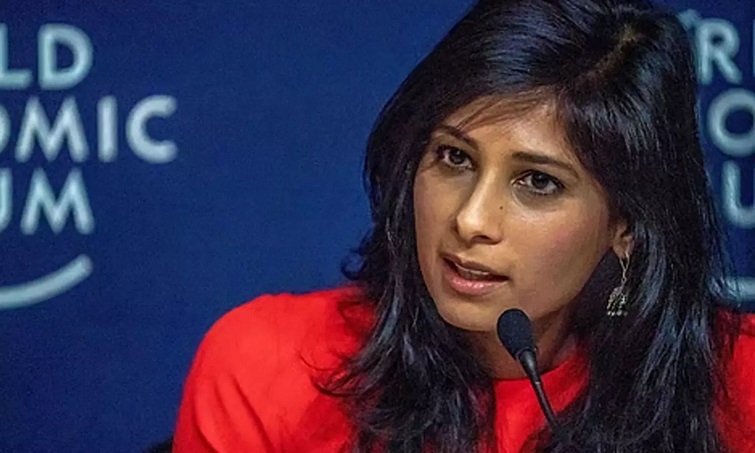
At the World Economic Forum in Davos, one of the world’s most influential economists delivered a blunt warning to policymakers and business leaders: pollution is not just an environmental crisis, it is a mass public-health emergency and a serious drag on economic growth.
That warning came from Gita Gopinath, the First Deputy Managing Director of the International Monetary Fund and former Chief Economist of the IMF. Speaking in her capacity as a global macro-economist, Gopinath linked pollution directly to millions of deaths, lost productivity, rising healthcare costs and weakened investment prospects, particularly in countries like India.
Pollution and premature deaths: the scale of the crisis
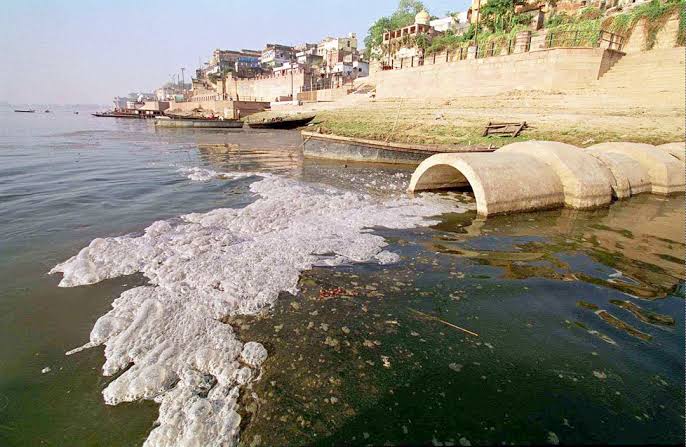
Gopinath underlined that pollution is already causing large-scale loss of life in India. Citing global health estimates, she pointed out that around 1.6 to 1.7 million people die prematurely every year in India due to air pollution alone.
These are not abstract numbers. They represent deaths caused by:
• Chronic respiratory illnesses
• Cardiovascular diseases
• Strokes
• Long-term exposure to polluted air and water
She emphasised that such a high mortality burden places India among the worst-affected countries globally, turning pollution into one of the leading risk factors for death — comparable to major diseases.
Why deaths from pollution matter to the economy
Gopinath stressed that these deaths and illnesses translate directly into economic losses.
When pollution shortens lives and damages health at scale, it:
• Reduces the size of the productive workforce
• Increases absenteeism and sick days
• Lowers lifetime earnings and labour efficiency
• Forces governments to spend more on healthcare instead of development
From a macroeconomic perspective, she noted, this results in lower potential growth and persistent pressure on public finances.
Economists increasingly estimate that pollution-related health damage can cost countries like India several percentage points of GDP each year, once lost productivity, healthcare spending and premature mortality are taken into account.
Investment and competitiveness at risk
Beyond health, Gopinath highlighted how pollution affects investment decisions. Poor air and water quality make cities less attractive to skilled workers, professionals and global firms.
Regions struggling with pollution face:
• Higher business costs
• Difficulty attracting talent
• Lower quality of life indicators
• Greater long-term uncertainty
For a country seeking to position itself as a global manufacturing and services hub, she warned, ignoring environmental quality can quietly undermine competitiveness and investor confidence.
An unequal burden with long-term consequences
Another key point in Gopinath’s remarks was the unequal impact of pollution. Poor households, informal workers, children and the elderly suffer the most from polluted air and water.
Health shocks linked to pollution often:
• Push families into poverty
• Disrupt education
• Reduce human capital formation
Over time, this deepens inequality and weakens the foundations of long-term economic growth.
A message Indian policymakers should take seriously
What makes Gopinath’s intervention especially significant is that it came not from an environmental activist, but from one of the world’s top macroeconomists, speaking at Davos to global political and business leaders.
Her message was clear: pollution control must be treated as an economic reform, not as a secondary environmental concern.
Ignoring pollution, she warned, risks locking India into a future of:
• Rising healthcare expenditure
• Lower productivity
• Reduced investment appeal
• Weaker and less inclusive growth
For Indian planners, the implication is stark. Economic growth and environmental health cannot be separated. Development strategies that tolerate high pollution may deliver short-term gains, but they erode the human and economic foundations needed for sustained prosperity.