(Ram Dutt Tripathi)

After spending tens of thousands of crores and four decades of public money, India must ask a blunt question: why are our rivers still stinking?
The honest answer is uncomfortable. Rivers like the Ganga and Yamuna are not polluted by accident. They are polluted by design — by a policy that allows cities to dump their sewage into rivers and then pretends that a few treatment plants will magically fix the damage.
This article argues that India’s river-cleaning programmes have failed not because of lack of technology, but because failure itself has become profitable. A closed ecosystem of politicians, senior bureaucrats, engineers, contractors, consultants, and sewage-technology companies has thrived on endless projects, repeated construction, and zero accountability.
If rivers were truly cleaned, budgets would stop, missions would end, and contracts would dry up. A polluted river keeps the system alive.
Equally culpable is a centralised urban governance model that excludes citizens from decisions over water and sewage, while silently draining rivers of their ecological flow. People bathe in polluted rivers, drink their contaminated water, and pay taxes for “cleaning” projects they cannot question.
Media Swaraj publishes this piece to break this silence.
It rejects the myth that rivers can be saved by technology alone.
It challenges the idea that governance without democracy can deliver ecological justice.
Rivers will not be cleaned until cities are forced to stop using them as sewers — and citizens demand that change.
This is not a technical debate.
It is a political choice.
————————–
After more than four decades of river-cleaning programmes — from the Ganga Action Plan to Namami Gange — India must confront an uncomfortable truth: our rivers are polluted not because technology has failed, but because policy has been fundamentally misguided.
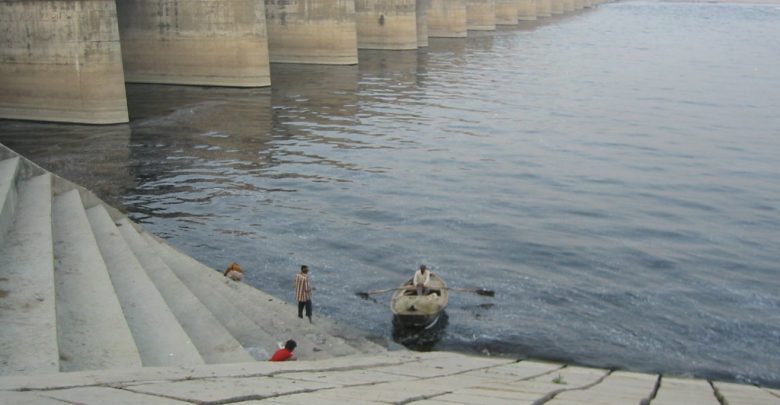
At the heart of this failure lies a deeply flawed assumption:that cities can continue to dump their sewage into rivers, provided it is “treated”. Experience has proved otherwise. Sewage Treatment Plants (STPs) have not cleaned the Ganga or the Yamuna. Instead, rivers have been converted into extensions of urban sewerage systems.
1. Rivers Were Designed to Carry Sewage
Indian cities historically developed along rivers, but modern urban planning treated rivers as waste-disposal channels rather than living ecosystems.
• Sewer lines were laid with slopes towards rivers
• Stormwater drains were converted into sewage drains
• Untreated or partially treated effluents were normalised
Even today, when STPs fail — due to power cuts, floods, overload or maintenance lapses — sewage automatically flows into rivers. Pollution is not accidental; it is structural.
2. Why Sewage Treatment Plants Keep Failing
The failure of STPs is systemic and predictable:
• Sewage generation far exceeds installed capacity
• Large portions of cities remain unsewered
• Mixed industrial waste destroys biological treatment processes
• Monsoons force bypassing of plants
• Operation and maintenance are chronically neglected
After decades of repetition, the conclusion is unavoidable:
STPs are incapable of protecting rivers when sewage is designed to flow into them.
3. Ground Reality: Haridwar, Kanpur, Prayagraj and Varanasi
• Haridwar: Despite multiple STPs, drains continue to discharge untreated waste upstream and downstream of pilgrimage sites.
• Kanpur: Tanneries and domestic sewage overwhelm treatment systems; CETPs remain dysfunctional.
• Prayagraj: Most drains bypass treatment and flow directly into the Ganga and Yamuna.
• Varanasi: Flagship projects coexist with open drains carrying raw sewage into the river.
These cities demonstrate a common pattern: infrastructure exists, but rivers remain polluted.
4. Namami Gange and the Political Economy of Failure
The persistence of failure is not accidental. The current model benefits a powerful nexus:
• Politicians: High-visibility projects and announcements
• Bureaucracy: Control over large budgets and missions
• Engineers & Consultants: Standardised designs, minimal accountability
• Contractors: Construction profits, limited responsibility for outcomes
• Technology Vendors: Expensive equipment and long-term AMC contracts
The system rewards spending, not cleanliness. A clean river would end projects; a polluted river sustains them.
5. The Real Solution: Delink Sewage from Rivers
If STPs cannot protect rivers, the logical response is clear:
Urban sewage must not flow into rivers at all.
Cities must:
• Treat and reuse wastewater locally
• Recharge groundwater
• Use treated water for construction, industry and green spaces
• Employ decentralised and land-based treatment systems
Globally, water-scarce regions already follow this approach. India must too.
6. Centralised Urban Governance: A Hidden Cause
Another major obstacle is over-centralised urban governance.
Water and sewerage are controlled by:
• Jal Nigams
• Development Authorities
• Special Purpose Vehicles
• Centrally sponsored missions
Municipal bodies and citizens have little say. When rivers are polluted, no accountable, elected authority can be held responsible.
True reform requires:
• Empowered city governments
• Ward-level planning and monitoring
• Public access to data and social audits
Without democratic control, rivers remain administrative abstractions.
7. Ecological Flow: Rivers Must Be Allowed to Live
Rivers are also killed by excessive water withdrawal.Dams, barrages and diversions leave rivers with:
• Insufficient flow
• No self-purifying capacity
Dumping treated sewage into a near-dry river is neither scientific nor ethical.
Ecological flow is non-negotiable for river survival.
Conclusion: Fix Cities, Not Rivers
Rivers do not need more missions. They need cities that take responsibility for their waste.Delinking sewage from rivers, restoring ecological flows, and democratising urban governance are not optional reforms — they are the only way forward.
#RiversNotSewers #CleanGanga #YamunaPollution #UrbanSewage #NamamiGange #EcologicalFlow #CityGovernance
( With input from AI tool ChatGPT)