

Valentine’s Day is often celebrated with fleeting gestures and commercial sentimentality. Yet, true love—in its most profound, transformative form—is not merely a feeling to be experienced for a day; it is a discipline to be cultivated for a lifetime. In an age marked by polarization and digital hostility, the need for a more robust understanding of love has never been greater.
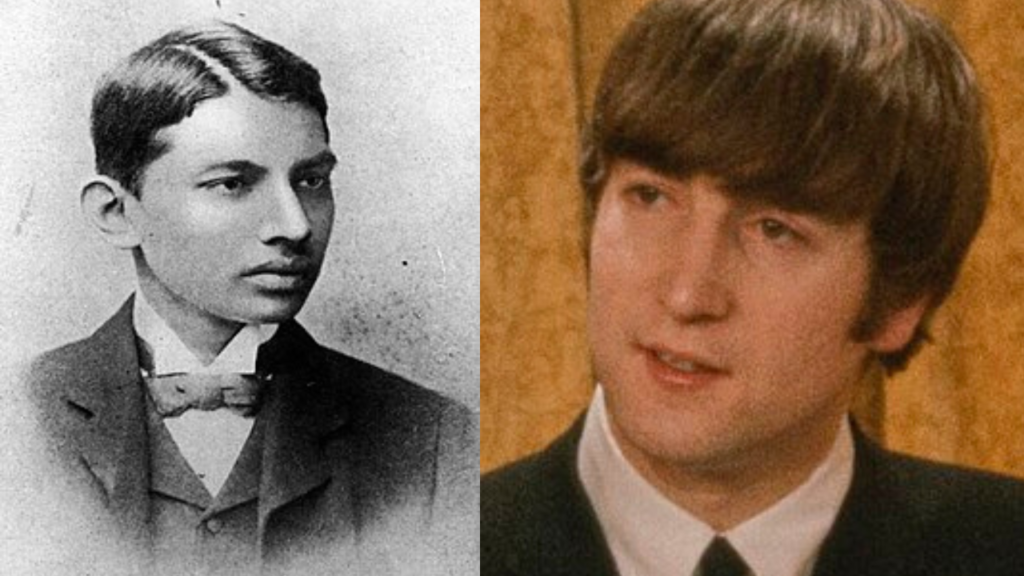
This article explores that deeper dimension, drawing inspiration from two unlikely partners in peace: John Lennon, who urged us to “nurture” love like a precious plant, and Mahatma Gandhi, who anchored his entire political philosophy in the “force of the soul.” Together, they remind us that nurturing love is not just a personal aspiration, but a practical moral principle that can actually change the world. – Editor
The Philosophy of Nurturing Love
In an age marked by polarization, digital hostility, and algorithm-driven outrage, one timeless truth demands renewed attention: nurturing love can change the world. What may sound idealistic is, in fact, a deeply practical moral principle — one articulated by thinkers, reformers, and artists across generations.
In his “Man of the Decade” interview in December 1969, John Lennon said:
“We’ve got the gift of love, but love is like a precious plant. You can’t just accept it and leave it in the cupboard… You’ve got to keep watering it. You’ve got to really look after it, nurture it…”
Lennon’s metaphor of love as a fragile yet powerful plant captures the essence of what humanity often forgets: love is not self-sustaining. It requires attention, discipline, and conscious effort.
Though he came from the world of music, Lennon was deeply influenced by champions of nonviolence such as Mahatma Gandhi and Martin Luther King Jr.. Reflecting on their tragic deaths, he once noted:
“Mahatma Gandhi and Martin Luther King are great examples of fantastic non-violent people who died violently. I can never work that out.”
Through music, Lennon attempted what Gandhi and King pursued through political and moral struggle — spreading the transformative power of love.
Why Nurturing Love Matters Today
We are living in a world where violence has almost become normalized. Institutionalized hatred spreads rapidly through social media platforms, amplified by artificial intelligence and engagement-driven algorithms. Ideological differences increasingly translate into hostility.
In such a climate, nurturing love is no longer a sentimental aspiration — it is a civilizational necessity.
Love, when consciously cultivated, acts as a counter-force to hatred. It interrupts cycles of revenge, humanizes opponents, and restores moral balance in public discourse. Without it, societies drift toward suspicion and division.
Gandhi and the Politics of Love
Few political thinkers integrated love into public life as deeply as Gandhi. His 1909 tract, Hind Swaraj, remains one of the clearest articulations of love as a political force.
Written in dialogue form, Hind Swaraj was Gandhi’s response to what he described as the “school of violence and hatred” he encountered in London. In the 1921 preface, he wrote:
“It is a book which can be put into the hands of a child. It teaches the gospel of love in place of that of hate.”
For Gandhi, love was not passive emotion. It was what he called the “force of the soul” — a dynamic moral energy that sustains human civilization. He wrote:
“The force of love is the same as the force of the soul or truth… The universe would disappear without the existence of that force.”
Gandhi observed that history records wars and conflicts but ignores the quiet functioning of love in daily life — the reconciliation within families, the peaceful coexistence of nations, the countless acts of understanding that prevent violence before it erupts.
In his own life, he embodied this philosophy. He famously declared:
“My love of the British is equal to that of my own people… I own no enemy on earth. That is my creed.”
This was not political strategy; it was moral conviction.
Love in the Age of Artificial Intelligence
Today, humanity stands at a technological crossroads. Artificial Intelligence shapes opinions, influences elections, and curates information flows. Yet AI cannot generate authentic compassion. It can simulate language, but it cannot nurture moral responsibility.
When relationships are reduced to data points and public debate becomes mechanized outrage, nurturing love becomes even more urgent. Without moral grounding, technological advancement risks amplifying division rather than solving it.
The question is not whether love is practical. The question is whether any sustainable future is possible without it.
From Personal Bonds to Global Peace
As Lennon suggested, developing a loving relationship between two individuals is just the beginning. If love can succeed between two, it can extend to four, then to communities, and eventually to nations.
Nurturing love can change the world because it transforms the smallest human interactions, and from there, reshapes political culture. It challenges the logic of enmity. It resists ideological labeling. It rehumanizes opponents.
Today, those who do not follow a particular ideology are often branded as enemies. In such a climate, the delicate plant of love must be consciously protected — watered with empathy, guarded against hatred, and cultivated with patience.
If we fail to nurture it, the future of humanity risks being governed by fear rather than understanding.
If we nurture it, however, we may yet discover that the most radical force available to us is not domination — but love.