Ram Dutt Tripathi

As climate scientists warn that the planet is approaching irreversible ecological tipping points, a disturbing contradiction is becoming clear. The countries most responsible for historical greenhouse gas emissions are weakening their climate commitments, while climate-vulnerable societies are forced to bear the consequences.
Extreme heat, polluted air and water, floods, droughts, and collapsing ecosystems are no longer distant projections. They are everyday realities—especially for the poor. Climate change is often presented as a technical or scientific problem. In truth, it is a political, economic, and ethical crisis rooted in the way power and development are organised.
Long before modern climate science, ancient civilizations warned that when greed overrides ethical governance, nature responds with disease and disaster.
Developed Countries and the Retreat from Climate Responsibility
Despite decades of international climate negotiations, some of the world’s richest and most historically polluting nations are stepping back from climate action. The United States, among the largest cumulative emitters of greenhouse gases, has witnessed repeated reversals in climate policy depending on political leadership. Environmental regulations are diluted, fossil fuel extraction is expanded, and international commitments are questioned or delayed.
In parts of Europe, climate action continues but with slowing momentum. Energy insecurity, economic pressures, and the rise of political populism have weakened ambition at a time when scientific warnings are intensifying. This retreat is not merely a failure of policy—it reflects a deeper crisis in the dominant model of development.
Climate Change Is Not an Accident of History
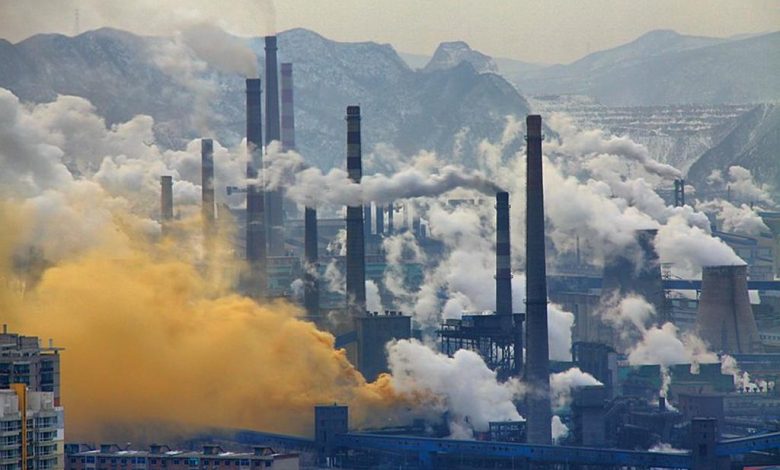
Modern climate change is driven by industrialisation, fossil fuel dependence, deforestation, and unsustainable consumption. These are not isolated choices but core features of a global economic system that rewards extraction, overproduction and endless growth.
The benefits of this system are concentrated among corporations and elites, while the costs—heatwaves, floods, food insecurity, disease, and displacement—are borne by the poor and future generations. Governments continue to subsidise polluting industries, weaken environmental safeguards, and delay climate action under pressure from powerful business interests.
Climate change, therefore, is not an unintended consequence. It is the predictable outcome of a development model built on profit without limits.
Charak Saṁhitā and Janapadodhwamsa: An Ancient Diagnosis of Ecological Collapse
Nearly two millennia ago, the Indian Ayurvedic text Charak Saṁhitā offered a striking framework to understand large-scale environmental and health crises. In the chapter on Janapadodhwamsa—the destruction of communities—Charaka explains that mass disease and social breakdown occur when shared natural elements such as air, water, land, and seasons are corrupted.
Crucially, this corruption is not described as natural. Charaka attributes it to human causes: unethical rulers, social injustice, greed, and the abandonment of dharma (ethical responsibility). Seasonal disorder (kāla-vaiparītya), polluted air and water, and degraded land are seen as consequences of moral and political decay.
In contemporary terms, climate change reflects this diagnosis with alarming precision. Disrupted seasons, unstable water cycles, polluted atmospheres, and degraded ecosystems are the result of human actions rooted in misgovernance and excess—now playing out at a planetary scale.
“Climate change is not a scientific accident. It is a political and ethical failure.”
Ancient China: Mandate of Heaven and Ecological Order
Ancient Chinese political philosophy closely linked environmental stability to moral governance. Confucian thought held that rulers governed under the “Mandate of Heaven,” and natural disasters—floods, droughts, famines—were interpreted as signs that this mandate had been lost.
Daoist philosophy went further, warning that relentless extraction, excessive commerce, and the pursuit of wealth violated the natural order (Dao). Such imbalance, it argued, destabilised both society and nature—an insight that resonates strongly with today’s climate crisis.
Greece and Rome: When Political Decay Damages Nature
Greek thinkers also recognised the link between governance and ecology. Plato described how deforestation and soil erosion in Greece resulted from human greed and poor land management. Environmental degradation, he argued, mirrored moral and political decline.
Roman writers such as Varro and Columella warned that intensive agriculture, mining, and deforestation would exhaust land and undermine long-term prosperity. Tacitus criticised imperial corruption and unchecked greed, noting how power divorced from restraint weakened both society and nature.
Modern industrial civilisation is now confronting these same ecological limits—on a global scale.
A Shared Civilizational Insight
Across cultures and continents, ancient societies shared a core understanding: environmental stability depends on ethical restraint and accountable governance. When rulers align with narrow commercial interests, when consumption becomes limitless, and when nature is treated merely as a resource, ecological breakdown follows.
Modern climate science confirms this insight with data and models. Rising temperatures, melting glaciers, extreme weather, biodiversity loss, and pollution-driven diseases are not random events. They are structural outcomes of a fossil-fuel-based, consumption-driven global economy.
India: Living on the Frontline of Climate Breakdown
India today faces severe climate impacts despite contributing relatively little to historical global emissions. The crisis is no longer abstract—it is immediate, visible, and deeply unequal.
Himalayas and Water Insecurity
The Himalayan region, often called the water tower of Asia, is experiencing rapid glacier retreat, declining snowfall, and erratic rainfall. Rivers such as the Ganga and Yamuna face reduced summer flows and intensified monsoon flooding. This seasonal instability echoes Charak Saṁhitā’s warning about kāla-vaiparītya—the corruption of time and seasons due to human excess.
Rivers Reduced to Industrial Drains
Across India, rivers carry untreated sewage, industrial effluents, and chemical waste. Weak regulation and corporate impunity have turned water bodies into public health hazards, causing waterborne diseases, toxic exposure, and antibiotic resistance—precisely the dangers ancient texts warned against.
Air Pollution and Urban Health Emergency
Indian cities rank among the most polluted in the world. Vehicular emissions, coal power plants, construction dust, waste burning, and industrial pollution have made toxic air a daily reality.
Delhi has become a global symbol of urban air pollution, with annual winter smog emergencies disrupting life and health. Alarmingly, cities like Dehradun—once known for clean air—now record similarly hazardous AQI levels during peak winter episodes, showing how unchecked development erases ecological advantage.
Forest Loss, Mining and New Diseases
Deforestation for mining, highways, dams, and commercial projects weakens ecological buffers, intensifies heat stress, disrupts rainfall, and increases the risk of zoonotic diseases. Indigenous communities, who protect forests and live with minimal ecological footprints, are displaced in the name of development that benefits distant urban centres.
“India is paying the price of a development model it did not design—but is now aggressively imitating.”
Development Without Restraint
India’s climate vulnerability is amplified by a development model that imitates high-consumption Western lifestyles without comparable resilience or social protection. The close alliance between political power and corporate interests—visible in diluted environmental impact assessments and rapid project clearances—reflects the same ruler–merchant nexus warned against by ancient civilizations.
Conclusion: An Old Warning for a New Crisis
Climate change is not merely a technological challenge—it is a crisis of values, power, and priorities. The retreat of developed countries from climate responsibility, combined with unsustainable development paths in countries like India, reveals the enduring relevance of ancient civilizational wisdom.
From Charak Saṁhitā to Chinese, Greek, and Roman traditions, history reminds us that environmental collapse is a symptom of deeper social disorder. Without rethinking development, consumption, and governance, no amount of technological innovation will be enough.
The choice before humanity—and India in particular—is stark: continue down a path of organised greed and ecological degradation, or reclaim an older wisdom that placed limits, responsibility, and collective well-being at the heart of progress.
( With input from AI tool ChatGPT)