By Ram Dutt Tripathi
📧 ramdutt.tripathi@gmail.com
Recently, I had the opportunity to visit Sri Lanka for about eight days and travel across several cities. What struck me most was not merely the cleanliness or orderliness of these cities, but the respect and priority given to pedestrians.
People follow traffic rules. Vehicles are parked only at designated places. Zebra crossings exist at regular intervals. Even more strikingly, where there is no zebra crossing or traffic police, motorists voluntarily stop when a pedestrian signals with a hand gesture, allowing them to cross the road safely and without fear.
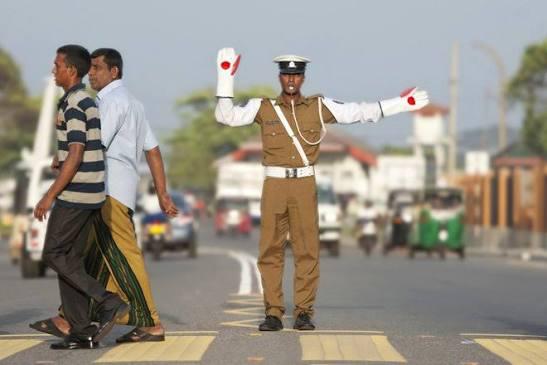
This is not unique to Sri Lanka. In every civilized and modern city of the world, traffic management begins with pedestrians and cyclists, not cars.
But Lucknow tells a completely different story.
⸻
Walking in Lucknow: A Daily Risk to Life
In Lucknow, walking on foot or cycling is no less than a risky adventure. There is no certainty when a speeding vehicle may brush past you or hit you from behind or the side.
Footpaths have almost disappeared. Wherever they still exist, they are rendered unusable due to encroachments—shops, street vendors, parked vehicles, electric poles, and advertisement boards.
Cycle tracks built just a few years ago are now occupied by commercial activities and parked vehicles. What was meant for safe, non-motorized transport has become an extension of the market.
Equally alarming is the near-total disappearance of zebra crossings at intersections. Crossing a road in Lucknow has become a life-threatening act, not a normal civic activity.
What We Forget: Walking Is a Constitutional Right
This chaos is not merely a traffic issue—it is a constitutional failure.
Under Article 21 of the Indian Constitution, the Right to Life has been interpreted by the Supreme Court to mean much more than physical survival. Justice P. N. Bhagwati famously observed:
“Life means not only physical existence but the use of every limb or faculty through which life is enjoyed.”
Indian courts have consistently held that:
• The Right to Life includes safe and dignified mobility
• Pedestrian safety is a constitutional obligation
• Footpaths are meant exclusively for pedestrians
• Unsafe road design and encroachments violate fundamental rights
In simple terms:
If a city makes walking unsafe, it is violating the Constitution.
Hazratganj: The Capital’s Heart, the Pedestrian’s Nightmare
Nowhere is this failure more visible than Hazratganj, the most prestigious and busiest area of Lucknow.
Try walking:
• From Coffee House to Ranjan Petrol Pump
• From Ambedkar statue towards Gandhi statue
• From Gandhi statue side to Hazratganj market
There is no safe pedestrian facility anywhere.
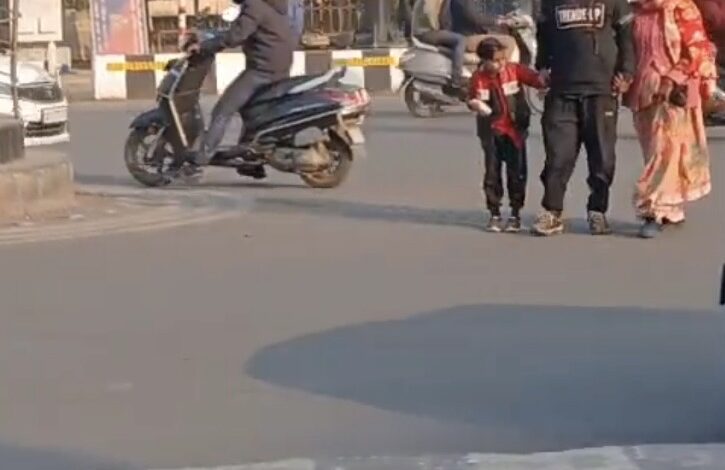
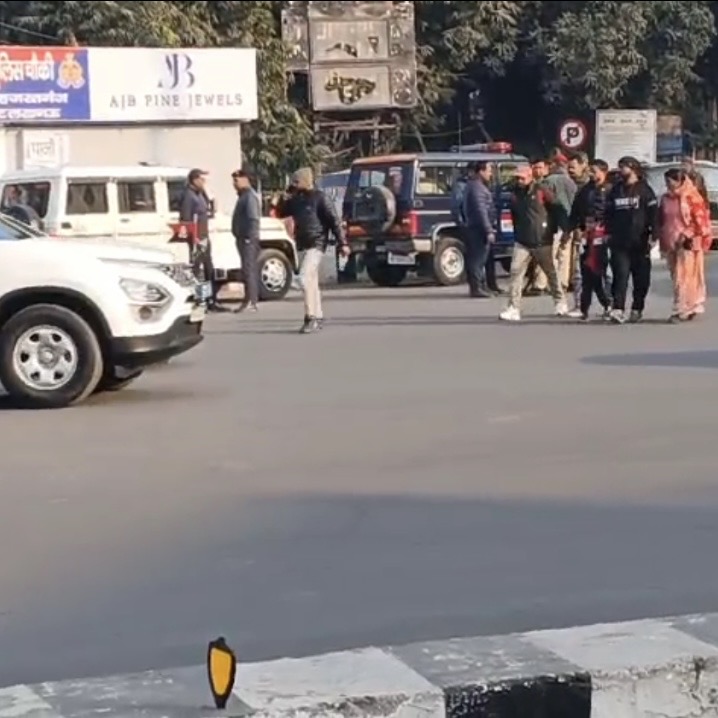
A pedestrian is forced to stop fast-moving vehicles with hand signals and somehow make their way across the road. Whether crossing from Janpath Market to Sahu Cinema or vice versa, there is no planned pedestrian infrastructure.
The recent traffic experiment allowing continuous vehicle movement without stopping at Hazratganj crossing has further worsened the situation. Vehicles may move faster—but pedestrians are left stranded and endangered.
The U-Turn Maze: Fuel, Time, and Public Money Wasted
The traffic design itself defies logic.
To travel from Governor House to Hazratganj, one must first go towards Vidhan Sabha or Lok Bhavan and then return via a U-turn. Similarly, going from Hazratganj towards Governor House requires a long detour around Shakti Bhavan.
This results in:
• Wastage of fuel
• Increased pollution
• Loss of productive time
• Rising public frustration
Ironically, throughout this entire area, pedestrians are completely ignored.
Who Is Responsible—and Why Citizens Are Confused
When citizens try to raise these issues, another serious problem emerges.
In Lucknow, multiple agencies are responsible for roads, including:
• Lucknow Municipal Corporation
• Lucknow Development Authority (LDA)
• Uttar Pradesh Housing Board
• Public Works Department (PWD)
As a result:
• Citizens do not know which authority to approach
• Each agency shifts responsibility to another
• No department takes ownership of holistic street design or pedestrian safety
A road may be built by one agency, dug up by another, encroached upon under the watch of a third, and policed by a fourth—with no unified accountability.
This institutional fragmentation is perhaps the biggest reason pedestrians remain invisible in city planning.
From Administrative Failure to Constitutional Neglect
Such diffusion of responsibility directly violates the spirit of Article 21.
The Constitution does not accept “inter-departmental confusion” as an excuse.
The State, as a whole, is responsible for protecting the citizen’s right to safe movement.
When no agency accepts responsibility:
• Footpaths disappear
• Zebra crossings vanish
• Pedestrians are pushed onto speeding roads
This turns an administrative lapse into a constitutional violation.
Law Exists, Political Will Is Missing
The irony is that legal support already exists.
The Motor Vehicles (Amendment) Act, 2019 empowers states to:
• Prioritize pedestrian safety
• Redesign roads for vulnerable users
• Create pedestrian-first urban spaces
Punjab has gone further, becoming the first Indian state to formally enforce the Right to Walk, mandating footpaths and pedestrian infrastructure in all new road projects.
Lucknow, despite being a capital city, has failed to act.
What Needs to Be Done Immediately
If the government genuinely wants to improve traffic in Lucknow, the starting point must be pedestrians.
Urgent Measures
1. Within a 2–4 km radius of Vidhan Sabha, restore and develop:
• Continuous footpaths
• Zebra crossings
• Safe pedestrian crossings
2. Remove encroachments and create organized parking facilities
3. Provide separate, protected paths for pedestrians and cyclists
4. Where necessary:
• Acquire land
• Set back boundary walls (including Governor House area)
• Redesign roads comprehensively
Role of Schools, Colleges, and Institutions
Large schools and colleges in this zone contribute significantly to congestion. They must:
• Push boundary walls inward
• Allow vehicles inside campuses for drop-off and pick-up
• Create separate entry and exit gates
Similarly, areas like Mall Avenue, Park Road, Dalibagh, Japling Road, Rana Pratap Marg, Station Road, Vidhan Sabha Marg have seen large bungalows replaced by multi-storey buildings—without widening roads.
Even today, this can be corrected through mandatory setbacks.
Public Transport, One-Way Systems, and Discipline
Traffic pressure on routes such as:
• Charbagh–Sikander Bagh
• Somnath Dwar–Kalidas Marg
• Stadium–Somnath Dwar
can be reduced through strong public transport and well-planned one-way systems in areas like Lalbagh, Naval Kishore Road, and Park Road.
London and Paris roads are not wider than Lucknow’s. Traffic flows there because of discipline, pedestrian priority, and reliable public transport.
VIP Culture: The Biggest Roadblock
The Vidhan Sabha area is crowded with government vehicles. Many drivers treat traffic rules as optional.
They must be strictly trained and penalized for violations.
VIP convoys should be avoided during school and office hours.
Under no circumstances should general traffic be stopped for more than one minute for any convoy.
When traffic is halted:
• Patients miss hospitals
• Children miss schools
• Citizens lose precious time and peace
Conclusion: Cities Begin with Pedestrians
The Constitution already recognizes the Right to Walk.
The law already empowers governments to protect pedestrians.
What Lucknow lacks is:
• Clear accountability
• Unified urban governance
• The will to place human life above institutional convenience
As long as roads belong to everyone and no one at the same time, pedestrians will remain the most vulnerable citizens of the capital.
Urban governance does not begin with cars or flyovers.
It begins with the citizen on foot.